
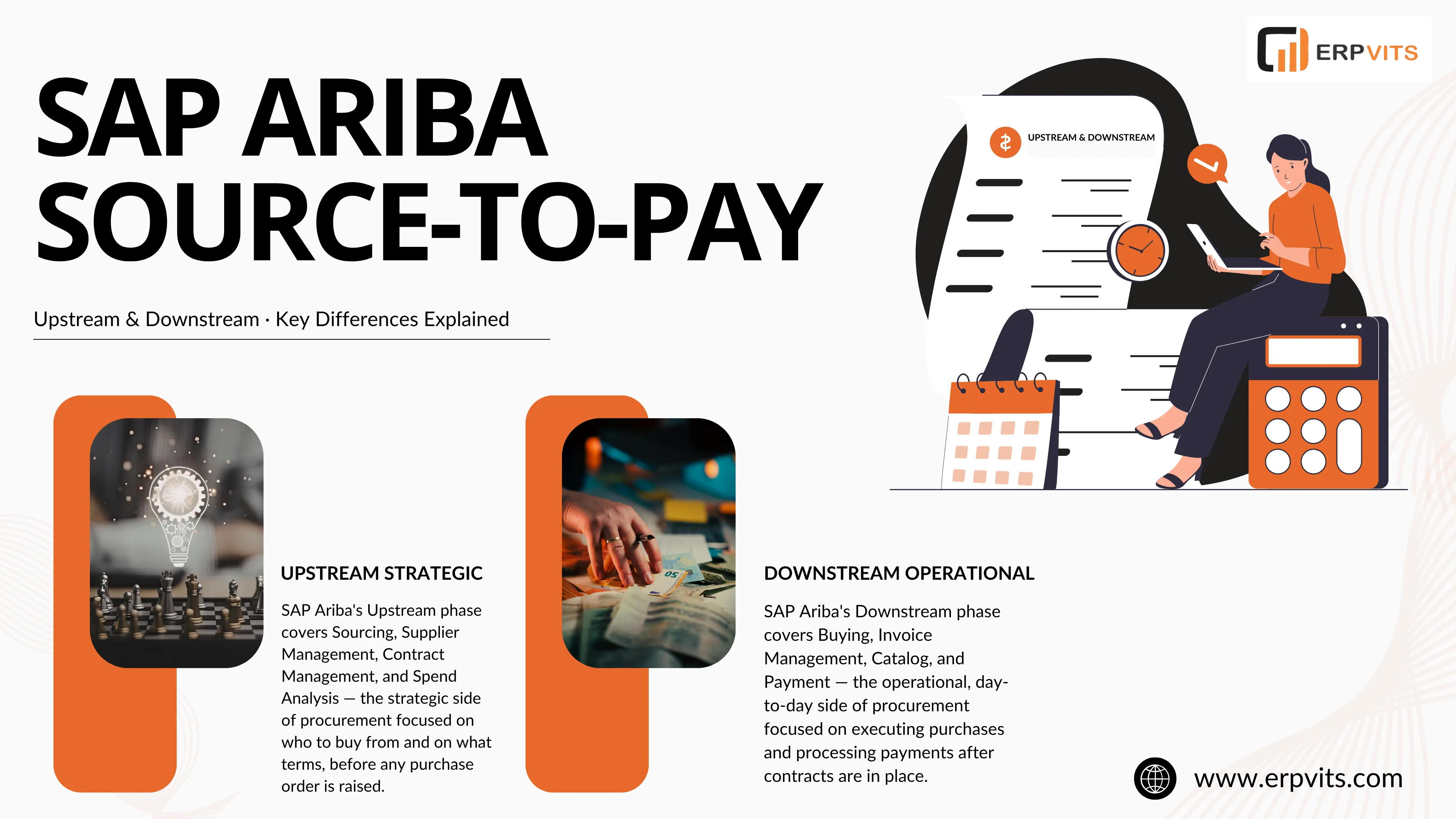
SAP Ariba Upstream and Downstream: Key Differences Explained with Real Examples
In today's highly competitive business environment, procurement has evolved beyond simply placing an order and waiting for products to arrive. Companies now depend on advanced technology that can control the entire lifecycle of their supply chains — which is why SAP Ariba sits at the center of this transformation. If you've ever wondered what SAP Ariba upstream and downstream actually refer to, how they differ, and why both matter to your organization, this article breaks it all down with clear, concrete information.
What Is SAP Ariba?
Before examining the distinction between downstream and upstream, it helps to understand what SAP Ariba is at its core. SAP Ariba is a cloud-based procurement and supply chain management platform that connects suppliers and buyers through a global network. It automates and digitizes every aspect of the procurement process — from identifying a business need all the way to paying an invoice.
The platform is made up of various SAP Ariba modules, each addressing a specific stage in the procurement lifecycle. These modules fall into two main categories: upstream procurement (also known as Source-to-Contract, or S2C) and downstream procurement (also known as Procure-to-Pay, or P2P). Understanding how these two halves work together is key to grasping the full SAP Ariba end-to-end process.
The Big Picture: SAP Ariba S2P Process
The SAP Ariba S2P (Source-to-Pay) process covers the complete lifecycle — from the moment a business identifies a supply need to the point when the supplier gets paid. It includes everything from finding and evaluating suppliers, negotiating contracts, raising purchase orders, receiving goods, and processing payments.
This journey is typically divided into two phases:
- Upstream — the strategic, planning-heavy phase covering sourcing, supplier management, and contract management
- Downstream — the operational, transactional phase covering purchasing, requisitioning, receiving, invoice management, and payment
Together, they form the SAP Ariba process flow that modern procurement teams rely on every single day.
SAP Ariba Upstream: The Strategic Half
The upstream part of SAP Ariba covers everything that happens before a purchase order is issued. It's the planning, thinking, and negotiation stage — and that's where the real strategic value gets created.
Key Upstream Modules
1. SAP Ariba Sourcing
This module handles the process of finding, evaluating, and selecting suppliers. It supports RFIs (Requests for Information), RFPs (Requests for Proposals), and RFQs (Requests for Quotes). Procurement teams use Ariba Sourcing to run competitive bidding events, compare supplier responses side by side, and make data-driven decisions.
2. SAP Ariba Supplier Lifecycle and Performance (SLP)
Supplier onboarding, qualification, and performance management are all handled here. Before a supplier is engaged, they must be registered, validated, and approved through this module — making it a critical part of the SAP Ariba supplier management workflow.
3. SAP Ariba Contract Management
Once a vendor is selected, contract terms are formalized here. Ariba Contract Management automates the creation, negotiation, and storage of agreements — keeping organizations in compliance and reducing legal risk in the process.
4. SAP Ariba Spend Analysis
This module gives procurement managers a clear picture of where money is being spent, with which suppliers, and across what categories. It feeds valuable insight into future sourcing decisions and helps identify opportunities for cost savings.
Real-World Example of Upstream Procurement
Imagine a pharmaceutical company that needs raw chemical ingredients for a new product line. The procurement team uses SAP Ariba Sourcing to send an RFP to fifteen potential suppliers across three continents. They collect bids and evaluate them on price, quality, lead times, and sustainability certifications — all within the system. After selecting two suppliers, they onboard them through SAP Ariba SLP and lock in pricing and terms using SAP Ariba Contract Management.
All of this happens before a single purchase order is raised. That's the essence of upstream procurement in action.
SAP Ariba Downstream: The Operational Half
The downstream side of the SAP Ariba procurement process covers everything that happens after sourcing decisions are made and contracts are signed. This is where daily transactional work gets done — requesting, ordering, receiving, and paying.
The SAP Ariba P2P (Procure-to-Pay) process forms the backbone of the downstream phase.
Key Downstream Modules
1. SAP Ariba Buying and Invoicing
This is the primary downstream module. It lets employees browse approved catalogs, create purchase requisitions, and convert them into purchase orders. Supplier invoices are received, matched against POs and receipts, and routed for payment approval.
2. SAP Ariba Catalog Management
Suppliers populate online catalogs with negotiated pricing and product details. Employees use these catalogs to buy within agreed terms — significantly reducing off-contract spending, sometimes called "maverick buying."
3. SAP Ariba Invoice Management
This module manages the full invoice lifecycle — from supplier submission through three-way matching (purchase order vs. goods receipt vs. invoice) to payment approval. It sharply reduces manual intervention and speeds up the payment cycle.
4. SAP Ariba Payment
The final step in the downstream process, this module handles payment execution, early-payment discounts, and supplier payment processing — often integrated directly with ERP systems like SAP S/4HANA.
Real-World Example of Downstream Procurement
Continuing the pharmaceutical example: once contracts with two raw material suppliers are signed, lab managers use SAP Ariba Buying to place routine orders straight from supplier catalogs. Invoices arrive automatically through the Ariba Network, get matched against the PO and goods receipt, and are routed to payment — no paper, no emails, no manual chasing. That's the SAP Ariba P2P process running exactly as designed.
Expert Guidance
Learn from industry experts
Trusted & Recognized
Top-rated by learners
Flexible Learning
Online options
Placement Support
Career support & more
SAP Ariba Upstream vs Downstream: A Side-by-Side Comparison
| Dimension | Upstream | Downstream |
|---|---|---|
| Phase | Strategic / Planning | Operational / Transactional |
| Process | Source-to-Contract (S2C) | Procure-to-Pay (P2P) |
| Focus | Who to buy from and on what terms | What to buy, when, and how to pay |
| Key Modules | Sourcing, SLP, Contract Management, Spend Analysis | Buying, Invoicing, Payment, Catalog Management |
| Users | Category Managers, Procurement Leaders | End Users, AP Teams, Finance |
| Output | Contracts, Preferred Supplier Lists | POs, Invoices, Payments |
| Frequency | Periodic (quarterly / annually) | Daily / Continuous |
| Value Driver | Cost savings through better deals | Efficiency and compliance |
Why the Distinction Matters in Practice
Many organizations make the mistake of implementing only half of the equation. Companies that focus exclusively on downstream activities — digitizing invoices and purchase orders, for instance — often miss the significant cost savings that upstream sourcing and supplier negotiation can deliver. On the flip side, organizations that excel at strategic sourcing but lack a smooth P2P process frequently struggle with contract leakage, where negotiated agreements never actually get used because buyers end up purchasing off-contract.
The real power of the SAP Ariba end-to-end process lies in how the two halves connect. Contracts negotiated upstream flow directly into catalogs and purchasing channels downstream. Spending data captured downstream informs the next round of upstream sourcing decisions. This creates a continuous improvement loop that drives value at every step of the SAP Ariba procurement process.
Where Upstream Ends and Downstream Begins
There's understandable confusion about exactly where the handoff happens. Within the SAP Ariba process flow, the dividing line is typically the signed contract or approved supplier agreement. Everything before that point — needs identification, market analysis, supplier evaluation, negotiations — is upstream. Everything after it — requisitioning, ordering, receiving, paying — is downstream.
Some practitioners also use the term "midstream" to describe contract management and supplier onboarding, since they bridge the gap between strategy and execution. For most practical purposes, however, contract management is considered part of the upstream phase.
SAP Ariba Sourcing vs Procurement: Clearing Up the Confusion
One persistent source of confusion in SAP Ariba discussions is the difference between sourcing and procurement. In everyday conversation, people often use these terms interchangeably. But within the SAP Ariba module structure, they mean different things.
SAP Ariba Sourcing is an upstream function. It's about identifying and selecting suppliers, running competitive events, and negotiating terms. SAP Ariba Procurement — or buying — is a downstream function. It's about purchasing goods and services against existing agreements.
Think of sourcing as setting the rules of the game, and procurement as actually playing it.
The Role of the Ariba Network
Connecting upstream and downstream is the Ariba Network — the world's largest business commerce platform, linking millions of buyers and suppliers globally. Suppliers use the Ariba Network to receive purchase orders, submit invoices, publish catalogs, and even participate in sourcing events. Buyers use it to collaborate with their supplier base in real time. The network acts as the invisible infrastructure that makes your SAP Ariba implementation truly collaborative and scalable across the entire supply chain.
SAP Ariba Implementation Considerations
When companies begin their SAP Ariba implementation journey, one of the first decisions is which modules to deploy and in what order. Many start with downstream P2P because the ROI is faster — quicker invoice processing, fewer errors, better compliance. Others begin with upstream sourcing because their pressing challenge is uncontrolled spending or poor supplier visibility.
The most effective approach is typically a phased implementation that tackles the most urgent needs first, then gradually expands to cover the full S2P lifecycle. A well-planned rollout ensures that insights from upstream flow smoothly into downstream, and that downstream data actively informs upstream strategy — creating the kind of feedback loop that keeps procurement improving over time.
Building a Career in SAP Ariba
As procurement digitization accelerates globally, professionals who understand the full SAP Ariba process — both upstream and downstream — are increasingly in demand. Whether you're a procurement analyst, supply chain manager, or ERP consultant, adding SAP Ariba expertise to your profile opens doors across industries.
Many professionals pursue structured SAP Ariba training to get comfortable with the platform's architecture, navigation, and configuration. A well-designed SAP Ariba training course typically covers the complete S2P lifecycle, individual module walkthroughs, integration with SAP S/4HANA, and real-world project scenarios. Those who go further often pursue SAP Ariba certification, which signals verified expertise to employers and clients alike.
The job market reflects strong demand. SAP Ariba job openings appear regularly across manufacturing, retail, healthcare, financial services, and the public sector — in roles ranging from functional consultant and solution architect to procurement analyst and project manager. SAP Ariba salary figures tend to be competitive, often well above industry averages for procurement roles, particularly where hands-on implementation experience is involved.
If you're preparing to enter the field, it's worth reviewing common SAP Ariba interview questions — things like explaining the difference between upstream and downstream, walking through the S2P process flow, or describing how to handle a sourcing event. A solid SAP Ariba tutorial can guide you through these scenarios step by step, building both conceptual understanding and practical confidence.
Final Thoughts
The distinction between SAP Ariba upstream and downstream isn't just an academic exercise — it's fundamental to understanding how modern procurement actually works. Upstream is where strategic value gets created, through better suppliers, stronger contracts, and smarter terms. Downstream is where that value gets realized, through compliant buying, efficient payments, and streamlined operations. Together, they form a complete, closed-loop procurement process that helps organizations cut costs, manage risk, and build stronger supplier relationships over time.
Whether you're a business leader evaluating a procurement transformation, a consultant scoping an SAP Ariba implementation, or a professional looking to sharpen your skills, understanding this upstream-downstream framework gives you a real, practical advantage.
Want to Master SAP Ariba from End to End?
Enroll with ERPVITS for comprehensive SAP Ariba training that covers the full S2P lifecycle — upstream sourcing, contract management, downstream P2P, and everything in between. ERPVITS offers structured courses with real-world project scenarios, certification preparation, and experienced guidance to make sure you're ready to take on your next SAP Ariba role with confidence. Visit ERPVITS today and start your path to becoming a certified SAP Ariba professional.