
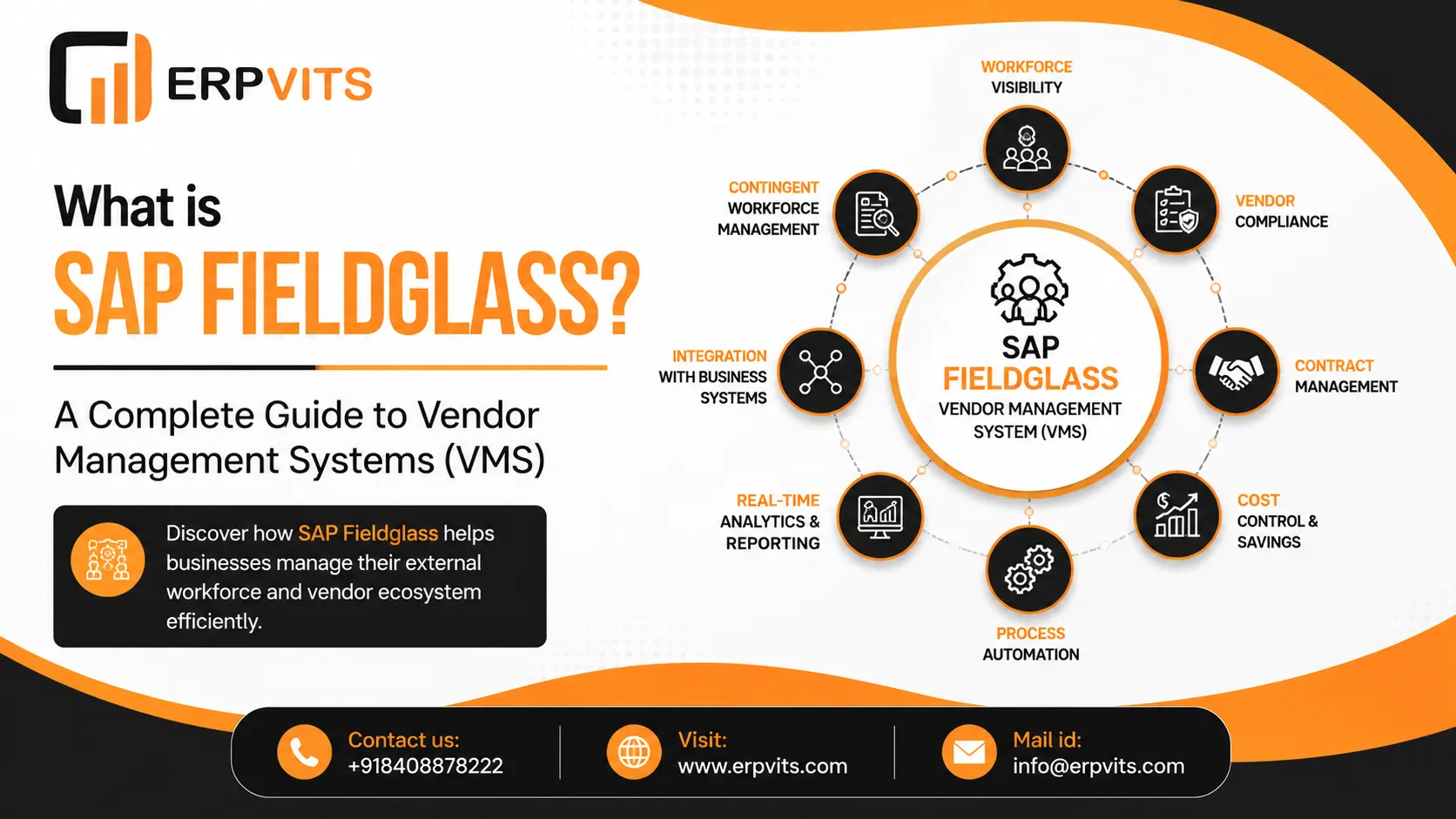
VMS Guide
What is SAP Fieldglass? A Complete Guide to Vendor Management Systems (VMS)
Today, organizations rely on an array of full-time employees and contractors, freelancers as well as third party service suppliers to help get the job completed. Managing this mix of workers by hand -- using spreadsheets, emails and disconnected systems can lead to costs overruns, compliance risks and a lack of visibility. This is the point where the use of a vendor management system (VMS) such as SAP Fieldglass comes in. This guide will explain the details of what SAP Fieldglass is and how it functions and what its main features are and if it's a good option for your business.
Basics
Introduction to Vendor Management Systems
What is a VMS?
A Vendor Management System (VMS) can be described as a cloud-based platform for software which helps companies manage their outside, non-payroll workforce including contractors, contingent workers, freelancers, freelancers and suppliers of services -- all from one platform. A VMS usually covers the entire cycle of external talent, including soliciting, sourcing the onboarding process, time and expense tracking as well as invoicing and offboarding.
Instead of every department separately working with staffing agencies, or keeping track of contractor hours on disconnected spreadsheets, the VMS consolidates these processes, giving the procurement as well as HR and finance teams one source of truth for their contractors.
Why Businesses Need a VMS Today
The way that organizations source talent has dramatically changed in the last decade. There are a variety of forces the driving force behind VMS adoption:
- Increase in the number of contingent workers -- the majority of companies are using freelancers, contractors or gig-workers to remain flexible and manage fixed costs for headcount.
- Risk of compliance increasing -- worker misclassification, labor laws violations, and tax exposure can result in substantial legal and financial sanctions.
- Cost visibility gaps -- without central tracking, companies are often unaware of the amount they're paying for contingent labor across different departments and regions.
- The pressure to hire speed is on -- business units require quicker ways to find specialized expertise without relying on lengthy conventional hiring processes.
- Globalization -- companies that manage employees across several countries require uniform processes that are still able to adapt to local laws.
A vendor management system can address all of these issues by providing organizations with an organized, auditable and automated method to manage talent from outside.
Overview
What is SAP Fieldglass?
Overview of SAP Fieldglass
SAP Fieldglass is a cloud-based vendor management system that assists enterprises in managing their workforce externally and managing procurement of services. It lets organizations source, manage, pay, and manage contingent workers, statements of work (SOW)-based engagements, as well as independent contractors -- all on one single platform.
Fieldglass is specifically designed for complex, large companies which require control and visibility over a multi-supplier, global program for contingent workers. It can be used throughout the process, from preparing the job requisition, through recruiting candidates through staffing providers and onboarding, monitoring time, billing and reporting.
History and Evolution of SAP Fieldglass
Acquisition by SAP
Fieldglass was established in 1999 as a separate VMS provider. It has since earned an impressive reputation in the field of contingent workforce management. The company was acquired by SAP in 2014. SAP purchased Fieldglass to enhance its human capital and procurement management services, making it one of the core components of SAP's enterprise software platform.
Growth in the Contingent Workforce Market
After the deal was completed, SAP Fieldglass has expanded its capabilities dramatically by introducing services procurement, more advanced analytics, AI-driven insight, and more tightly integrated to various SAP products. Today, it is considered to be one of the top VMS platforms worldwide, and is used by a variety of Fortune 500 companies to manage billions of dollars in workforce external spending.
Where SAP Fieldglass Fits in the SAP Ecosystem
SAP Fieldglass doesn't operate in the midst of anything else. It's a part of SAP's wider smart spend and business networking suite which includes:
- SAP Ariba for procurement and supplier management
- SAP SuccessFactors for HR core and the management of talent
- SAP S/4HANA and other ERP systems for accounting and finance
In combination, the systems offer organisations complete transparency across their entire workforce, both external and internal labor.
Features
Expert Guidance
Learn from industry experts
Trusted & Recognized
Top-rated by learners
Flexible Learning
Online options
Placement Support
Career support & more
Key Features of SAP Fieldglass
Contingent Workforce Management
Fieldglass is a well-organized way to control temporary and contract work from requisition until offboarding.
Sourcing and Onboarding
HR managers can make job requisitions, which are then automatically sent to approved personnel suppliers. Suppliers can directly submit candidates to the system while hiring managers are able to examine, interview, and select the candidates, and all the while the system keeps track of rates, approvals, as well as the documentation for compliance.
Time and Expense Tracking
After a worker has been onboarded, Fieldglass tracks time worked and expenditures incurred in accordance with budgets approved by the company. Timesheets can be routed automatically to the manager for approval, reducing mistakes and administrative burdens while also ensuring accuracy in billing.
Services Procurement (SOW Management)
In addition to staffing workers individually, Fieldglass also manages project-based engagements that are delivered-driven. These are known as Statement of Work (SOW) arrangements.
Statement of Work Tracking
The project's scope can be defined by organizations, along with deliverables, timelines and payment terms inside Fieldglass, which gives procurement and finance teams visibility into the project-based spending that is traditionally difficult to keep track of.
Milestone and Deliverable Management
Fieldglass lets teams break down SOW projects into stages, measure the progress towards deliverables, and make payments only when specific requirements are met -- which reduces the chance of overpayments or scope increase.
Contractor and Freelancer Management
Worker Classification
Correctly defining independent contractors or employees is a major issue with respect to compliance. Fieldglass comes with tools that aid organizations in documenting and assessing worker classifications to minimize the risk of legal liability.
Labor Law Compliance
Fieldglass assists organizations in staying aligned to local labor regulations by integrating compliance checkpoints into workflows, like minimum engagement durations, as well as the requirement for documentation.
Tax and Classification Risk
The platform will alert you to possible misclassification risk and help audit trails that prove the due diligence required, which is becoming more important as regulators examine the practice of contingent labor in all countries.
Core Modules of SAP Fieldglass
Contingent Labor Management
This is the foundational module for managing temporary staff sourced through staffing agencies, covering the full requisition-to-payment cycle.
Services Procurement
This module is responsible for SOW-based engagements and outcomes-driven projects, which gives organizations control over expenditures for projects that don't fall well into the traditional categories of staffing.
Analytics Dashboard
Fieldglass offers real-time dashboards that give HR and procurement managers access to headcount, spending, suppliers' performance, in addition to program conformity.
Reporting Capabilities
Standard and custom reports permit companies to study trends, compare suppliers' performance, and aid in strategic workforce planning decisions using facts instead of guesswork.
Workflow
How SAP Fieldglass Works
Workflow Overview
Requisition to Onboarding
The typical workflow starts when the hiring manager files a requisition. It is sent to be approved, and then sent to suppliers who are qualified, and applicants are then submitted for interview, then chosen and tracked in the platform.
Invoicing and Payment Processing
After work begins, timesheets and expense reports feed into workflows for automated invoicing. Invoices that have been approved are sent through the finance system for processing, which reduces the need for manual reconciliation and delays in payment.
Integration with Other Systems
SAP Ariba Integration
Fieldglass works with SAP Ariba to align contingent workforce spending with the overall procurement strategies as well as supplier management and sourcing-related events.
SuccessFactors Integration
Integration with SuccessFactors can give organizations an integrated view of their entire workforce, using permanent employee data and contingent worker data to provide a complete workforce plan.
ERP and Financial Systems Integration
Fieldglass integrates with SAP S/4HANA and other ERP systems to ensure that labor-related contingent expenditure can be directly integrated into financial reports and budgeting processes, without manually entering data.
Benefits
Benefits of Using SAP Fieldglass
Cost Savings and Budget Control
Centralizing rate cards and workflows for approval and spending visibility, companies typically cut down on maverick spending, and negotiate lower rates with suppliers.
Better Visibility in the Workforce
Leaders can get a real-time, exact image of how many employees are working on a contingent basis, in what location, and at what cost -- a feat that's difficult to attain by hand monitoring.
Risk Mitigation and Compliance
The built-in compliance checkpoints, document tracking, and audit trails reduce the risk to the financial and legal aspects related to misclassification of employees and other regulatory violations.
Faster Time-to-Hire
Streamlined Vendor Onboarding
Standardized onboarding procedures for suppliers mean new vendors for staffing are able to be added to the program much more quickly, thereby allowing access to more of the talent pool.
Automated Approval Workflows
Automated routing of requisitions, timesheets, and invoices can eliminate obstructions that normally slow traditional management of contractors.
Comparison
SAP Fieldglass vs Other VMS Platforms
Comparison Criteria
Ease of Use: Fieldglass offers a sleek interface, but some users are concerned about the learning curve due to the vast array of configuration options -- an issue common to high-end enterprise platforms.
Scalability: Fieldglass is designed for large global companies that manage complex contingent workforces spanning multiple countries, which makes it extremely scalable for large companies.
Pricing Models: Pricing is usually individualized depending on the amount of transactions performed, the amount of spend under management, and the modules employed, instead of a standard monthly subscription fee.
Popular Alternatives
Beeline is among the most frequently compared alternatives to SAP Fieldglass, also targeting the management of contingent workforces at an enterprise level.
SAP Fieldglass vs Beeline: Key Differences
Although both platforms provide similar core capabilities, SAP Fieldglass tends to be a better fit for companies who are already part of the SAP ecosystem, due to the native integrations it has with Ariba, SuccessFactors, and S/4HANA. Beeline is frequently praised for its strong analytics, and has a more user-friendly interface for smaller deployments. The best choice is contingent on the existing technology stack, complexity of the program, and the features that matter most to you.
| Criteria | SAP Fieldglass | Beeline |
|---|---|---|
| Best suited for | Large enterprises, especially those already using SAP products | Enterprises seeking a slightly simpler interface |
| Native integrations | SAP Ariba, SuccessFactors, S/4HANA | Broad third-party integrations, strong analytics focus |
| Ease of use | Feature-rich, steeper learning curve | Generally considered more intuitive for smaller deployments |
| Scalability | Built for global, multi-country programs | Scalable, widely used across mid-to-large enterprises |
| Pricing | Customized, quote-based | Customized, quote-based |
Fit
Who Should Use SAP Fieldglass?
Enterprises with Large Contingent Workforces
Fieldglass is the ideal material for large companies that manage hundreds or even thousands of contingent employees across multiple suppliers, business units, and geographic regions.
Industries That Benefit Most
IT and Technology
Tech companies often depend on contract workers with specialized skills for project-based work, which makes organized VMS tools crucial to oversee hiring on a skill-based basis at a larger scale.
Healthcare
Healthcare institutions utilize Fieldglass to oversee locum tenens personnel, travel nurses, as well as other contingent clinical and administrative staff, while adhering to strict standards of compliance.
Manufacturing
Manufacturers typically contract with contractors to fulfill seasonal production requirements, specialized engineering projects, and facility services, all of which benefit from central spending transparency.
Considerations
Challenges and Considerations
Implementation Complexity
Being an enterprise-grade platform, Fieldglass deployments are complicated and often require dedicated project teams and meticulous process mapping prior to launching.
Change Management
The successful adoption of digital workflows requires the support of hiring managers as well as suppliers and finance departments, who all need to transition from traditional manual processes to a formal digital workflow.
Cost of Ownership
Beyond licensing, businesses should plan for implementation services, ongoing administration, and the possibility of customization costs when evaluating the total cost of ownership of this vendor management software.
FAQ
Frequently Asked Questions (FAQs)
Is SAP Fieldglass Only for Large Enterprises?
While Fieldglass is typically utilized by large global companies because of its depth and flexibility, mid-sized companies with expanding contingent workforce programs may also benefit, especially when they plan to expand their workforce management requirements for external employees.
How Much Does SAP Fieldglass Cost?
SAP Fieldglass pricing is not generally published and is dependent on variables such as the amount of spend under management, the quantity of modules that are deployed, and organizational complexity. Potential customers should contact SAP directly to request an estimate.
Does SAP Fieldglass Integrate with Non-SAP Systems?
Yes. Although Fieldglass has deep native integration with SAP Ariba, SuccessFactors, and S/4HANA, it also allows integrations with third-party HRIS systems, ERP, and financial systems via middleware and APIs, which makes it a viable option for companies that aren't fully standardized on SAP.
Is SAP Fieldglass Available as a Mobile App?
Yes. SAP Fieldglass offers mobile access that lets hiring managers, workers, as well as suppliers perform crucial tasks like approval of timesheets, evaluating candidates, and confirming requisition status directly from mobile devices.
Does SAP Fieldglass Handle Payroll?
No. SAP Fieldglass manages and pays contractors, contingent workers, and SOW-based work, but it doesn't manage the payroll of full-time employees. This is done by integrating SAP SuccessFactors and other HR/payroll systems.
Does SAP Fieldglass Support Direct Sourcing?
Yes. Apart from managing contingent labor that is sourced from suppliers, Fieldglass allows organizations to develop and recruit their own talent pool, for example, former freelancers or those who have been pre-vetted, without the need to always go through a staffing agency.
Can Small and Mid-Sized Businesses Use SAP Fieldglass?
While Fieldglass is designed primarily for large companies that have complex, high-volume contingent workforce plans, some mid-sized companies with increasing requirements for external workforces do utilize it, especially when they are planning to scale or are already operating within the wider SAP ecosystem.